When You Sell Labor, Your Clients Shouldn't See Someone Else's Brand
Event and catering staffing agencies are rebranding their workforce platform as their own product. Here's why, and what it takes.
The Brand Problem in the Staffing Business
Event and catering staffing agencies spend years building relationships with venues, corporate planners, and recurring clients. The agency's name is the thing those clients trust when they book 40 servers for a gala or 12 stagehands for a load-in. That trust is built through consistent delivery, and consistent branding is part of that delivery.
Then a shift gets scheduled, a time-tracking summary goes out, or a worker confirms availability, and the client sees a platform name they've never heard of. It's a small thing. It doesn't break the deal. But it chips at the perception that the agency is running a tight, professional operation end to end. For agencies competing on service quality, the gap between "your brand" and "your operations technology" shows up in these small, daily moments.
White labeling closes that gap. It means your workforce platform looks, feels, and communicates like your company, not someone else's. Here's where the brand typically breaks down without it, and what it actually takes to fix.
Where the Brand Breaks Down Without White Labeling
The Email Your Client Sees
When a time-tracking summary or weekly order digest lands in a corporate client's inbox, the "from" address sets the tone. There's a real difference between hr@youragency.com and noreply@someplatform.com. The first reinforces the relationship. The second raises a question, even if the client never asks it out loud: who is this, and why are they emailing me about my staffing?
The Link Your Worker Clicks
Workers who click through to confirm a shift at staff.youragency.com have a different experience than workers landing on a third-party domain. Brand familiarity reduces confusion, cuts down on support questions ("Is this legit?"), and reinforces that the agency is the employer, not a middleman routing them through someone else's software.
The App Icon on Their Phone
Workers who install the mobile app see that icon on their home screen every day. If that icon shows another company's logo, the agency is effectively running free advertising for a platform vendor on its own workers' devices. Over months and years, that's a subtle but real erosion of brand identity with the people the agency depends on most.
The Seven Layers Roosted Covers
Roosted's white labeling isn't a logo swap. It covers seven distinct layers of the platform, each one touching a different part of how workers and clients experience the agency's brand.
1. Custom domain with HTTPS included. Workers and clients access the platform at a URL like staff.youragency.com. Roosted handles TLS certificate issuance and renewal automatically. The agency provides two DNS records, and the rest is managed in the background.
2. Brand name replacement across every touchpoint. The agency's company name replaces "Roosted" in email subject lines, message bodies, SMS texts, and in-app screens. Word-boundary matching ensures nothing gets garbled in the swap.
3. Logo, favicon, and installable PWA icons. Upload once, and the agency's branding appears on login pages, every worker and client email, browser tabs, and the installable mobile web app. One upload covers all surfaces.
4. Custom email sending domain. Emails arrive from hr@youragency.com instead of a generic platform address. A one-time DNS verification flow connects the sending domain, and every transactional email routes through it from that point forward.
5. Per-template email overrides. The 10+ system emails that clients and workers actually read (shift updates, shift-available reachouts, time-tracking summaries, weekly client order digests, credential expirations, and more) can each be customized with a unique subject line, from-name, and HTML body. A live preview shows exactly what recipients will see.
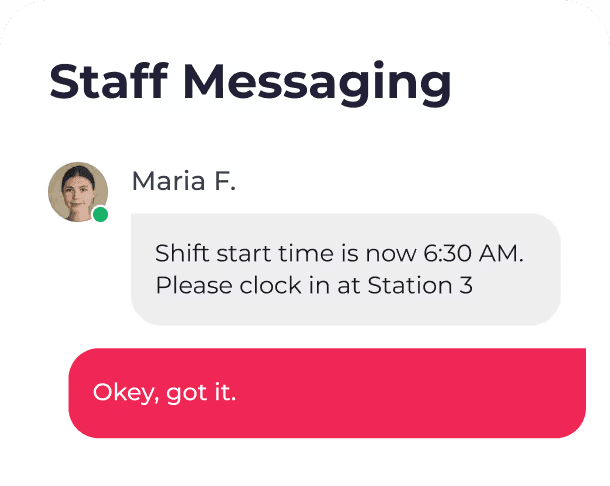
6. Custom invite-to-work messaging. The email sequences, SMS messages (initial invite, confirm request, acceptance, decline), and push notifications workers receive when offered a shift are all editable. This is often the first interaction a new worker has with the agency, and it sets the tone for everything that follows.
7. Placeholder-aware template editor. Each template displays the dynamic tokens available (#COMPANYNAME#, #SHIFTSTART#, $eventName, and others) so the agency can write custom content that still fills correctly with real shift details at send time. No broken variables, no guesswork.
What Setup Actually Looks Like
White labeling sounds like a heavy technical lift, but the actual setup is straightforward. Two DNS records for the custom domain. A one-time verification flow for the sending domain. A logo upload. A round of template edits to match the agency's voice and formatting preferences.
Roosted handles TLS certificates and sending-domain reputation in the background, so there's no ongoing maintenance on the agency's side. For event staffing and catering agencies specifically, this matters. Agency-side IT is usually one person wearing three other hats, or an outside vendor on retainer. This is an afternoon project, not a quarter-long integration.
When White Labeling Pays Off
For Corporate Clients
Enterprise clients expect consistent vendor branding. When the time-tracking digest, weekly summaries, and client-portal access all carry the agency's name, procurement and AP teams have fewer questions about who delivered the service and who gets paid. That consistency smooths invoicing, simplifies vendor management, and reinforces the agency's position as a reliable partner.
For Venue Partnerships
Venues that work with multiple staffing agencies need clear attribution for which agency sent which workers to which events. Branded communications keep that attribution clean when venue managers forward emails internally, reference past events, or reconcile staffing against their own records.
For Retention and Referrals
Workers who interact with a branded experience over months or years build their professional identity with the agency, not the platform underneath it. When they refer friends, pick up extra shifts, or come back after a break, they remember the agency's name. That loyalty compounds. For agencies managing large on-demand pools, even a small improvement in referral rates or return-worker rates moves the needle on recruiting costs.
What White Labeling Isn't
White labeling isn't about hiding the platform from workers in a deceptive way. Roosted remains the platform of record for audit, support, and compliance purposes. Workers can always reach Roosted support if needed.
What white labeling does is control the day-to-day experience. The emails, the app, the domain, the SMS messages. That's already a normal expectation in enterprise software. Agencies that resell labor to corporate clients, venues, and planners are running a B2B operation, and B2B operations run on consistent branding. White labeling simply extends that consistency to the workforce platform.
Get Started
If your agency is ready to put its own brand on the platform your workers and clients use every day, Roosted's white labeling is included with every subscription. No add-on fees, no enterprise-tier gate.
Explore the full capabilities on the White Label feature page, or get started with a free trial.